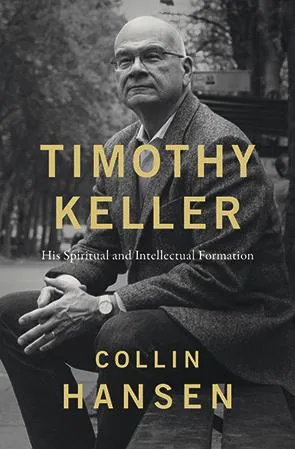
TIMOTHY KELLER:
His Spiritual And Intellectual Formation
By Colin Hansen
Zondervan. 320 pages. £17.99
ISBN 978 0 310 128 687
I’m cautious about biographies for people still alive, partly because it’s not the end of the story. But this book was well worth the read.
It starts like a normal biography with some family details, but the rest of the book makes only passing reference to his personal life, instead focusing on the influential tributaries that have shaped his thinking and practice.
Tim Keller came to my attention through his many writings and through hearing him at conferences. I greatly enjoyed his calm and compelling style inviting the listener to follow his train of thought. There are some misgivings I share around certain views he holds or appears to hold, but I have found him to be a great help to the church. This book shows how, by God’s grace he became an excellent communicator of the gospel.
Keller’s intellectual ability is obvious; at university he analysed and critiqued liberal sources even before he became a Christian at the age of 20. After his conversion he seems to have absorbed the preaching and writing of so many, past, and present. Leaving aside his extensive reading, his influences varied from mentors who are unknown and many who are prominent Christian leaders. From John Stott he learnt the model of expository preaching, a heart for evangelism, and the value of gospel partnership. From Dick Lucas, how he wanted to preach! From Dr Martyn Lloyd Jones, passionate preaching, from R C Sproul, reformed theology, wedded to rigorous apologetics. Edmund Clowney showed him compassionate theology in awe of the transcendent God. Harvie Conn introduced him to contextualisation, David Powlinson, to counselling, and Jack Miller to evangelistic strategy; to name a few!
I recommend the book not least for a brief sketch of the recent history of evangelicalism. It also shows us a man who is a great example in his willingness to draw from multiple influences, in what seemed to me a Biblical faithful syncretism (if that is not a contradiction). He avoids tribalism which rejects all contrary views but retains a Biblical informed discernment that rejects error.
I would have liked more attention to assessing the influence of Keller, reflecting on the strengths and weaknesses, and seeking to apply it to our own ministries. And at times the book felt rather man-centred, in awe of his intellect, spirituality and success, yet not always explicitly tracing the good providence of God. But it was a good read and I thank God for the way He has graciously shaped and used Keller for his glory.
Loving country without losing the gospel
Christmas decorations are now up everywhere. For some people, this is a welcome relief from the ongoing proliferation of the …