At the end of the first day of the Anglican Primates Meeting in February in Dar es Salaam, Tanzania, news reports were proclaiming that The Episcopal Church (TEC) of America had escaped censure for its actions in ordaining a non-celibate divorced gay man as a bishop.
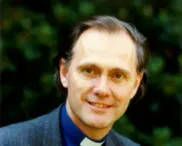
A report of views gathered from around the Communion presented to the Primates by the Archbishop of Canterbury, Rowan Williams (pictured above), said that TEC had undergone a ‘significant shift’ since the consecration of Gene Robinson in 2003 and its expressions of regret were ‘sufficient’.
The report noted that the General Convention had been unable to follow the Windsor Report’s request because legal advice to the General Convention had been that a moratorium on same sex-blessings was ‘difficult to embody in legislation under the provisions of the Episcopal Church’s constitution’. The reason was the canonical prohibition in the Church’s canons (laws) of any kind of discrimination, including discrimination on the grounds of sexual orientation. However, on further examination it is clear that this canon relates to orientation, and the current issue is over practice.
In practice
The report concentrates on whether the words of the Resolutions of the General Convention in June 2006 meet the wording required by the Windsor Report. Archbishop Philip Aspinall, the Primate of Australia, told the press that, though TEC did not use the precise language of the Windsor Report, it did the most that could have been done, and its response is adequate in its own terms. TEC’s regret for breaching bonds of affection was judged to be sufficient to meet the request of the Primates.
But the report was not satisfied with TEC’s response on same-sex blessings. Pastoral practice on the ground is that there is blessing of same-sex unions.
The release of this report was accompanied by a statement from TEC Primate Jefferts Schori’s aide, Robert Williams, that she ‘will not waver in her stand for justice and inclusion of all people in the body of Christ’.
Conservatives observed that, if the Primates were to accept this report, TEC would remain a full member of the Anglican Communion. There would be no grounds for orthodox Anglicans to object that TEC had acted against the well-being of the Anglican Communion.
Actions
However, the actions of TEC are a clearer indication of their position. Two people living in same-sex unions have been nominated for election as bishops. The bishops had elected a Presiding Bishop who has formalised the blessing of same-sex unions in her diocese. The Episcopal Church as a province has legitimised the exploration and experience of such rites and bishops, and on the basis of this provincial legitimisation, has granted permission for them to be developed and celebrated. The Diocese of Arkansas has agreed to permit same-sex blessings since GC 2006.
Out of Communion
The scenario that TEC was being approved was shattered when the Church of Nigeria website reported that, on Friday midday, a number of the Global South Primates had not shared in the midday communion service with their fellow Primates. They included Archbishops Peter Akinola (Nigeria), John Chew (South East Asia), Benjamin Nzimbi (Kenya), Justice Akrofi (West Africa), Henry Orombi (Uganda), Gregory Venables (Southern Cone) and Emmanuel Kolini (Rwanda). Archbishop Bernard Malango of Central Africa also attended the service but did not take communion. These archbishops represent more than 30 million Anglicans (out of 76 million, of whom 26 million are recorded in England).
Statement released
‘We each take the celebration of the Holy Eucharist very seriously. This deliberate action is a poignant reminder of the brokenness of the Anglican Communion. It makes clear that the torn fabric of the Church has been torn further. It is a consequence of the decision taken by our provinces to declare that our relationship with The Episcopal Church is either broken or severely impaired.
‘Scripture teaches that before coming to sit with one another at the Lord’s Table we must be reconciled. (Matthew 5.23-26 and 1 Corinthians 11.27-29) We have made repeated calls for repentance by The Episcopal Church and its leadership with no success. We continue to pray for a change of heart.
‘We are unable to come to the Holy Table with the Presiding Bishop of The Episcopal Church because to do so would be a violation of Scriptural teaching and the traditional Anglican understanding, “Ye that do truly and earnestly repent you of your sins, and are in love and charity with your neighbours, and intend to lead a new life, following the commandments of God, and walking from henceforth in his holy ways; Draw near with faith…” (Book of Common Prayer).
‘This is a painful decision for us and also for our host and brother, the Most Rev. Donald Mtetemela. He understands our painful dilemma and accepts our decision. Pray for the Church.’
Archbishop Aspinall of Australia reflected at the Press Conference that these archbishops were in broken communion with TEC and so he would not be surprised if those archbishops were absent from the service. Archbishop Drexel Gomez confirmed that, prior to the meeting, 12 provinces had remained silent on their relationship with TEC, six including his own had stated that they were in impaired communion, and that nine were in broken communion.
Covenant
Archbishop Philip Aspinall also explained that the Anglican Covenant was to be published on February 19, discussed around the Communion for 12 months, a revised version would be brought to the Lambeth Conference, who would revise it further and it would then be adopted. Archbishop Gomez, the chair of the Covenant Drafting Group, said that it was a statement of Classical Anglicanism, but that it dealt with theological frameworks rather than homosexuality in particular.
On the slow progress of the Panel of Reference, Archbishop Aspinall explained: ‘There has to be a will for reconciliation in these circumstances for the work to be effective’.
Chris Sugden,
Anglican Mainstream