It is difficult to conceive of the problem that faced Darwin and his contemporaries when we compare the level and nature of his knowledge with that which we possess today.
We can join him in postulating how morphological changes could accumulate, gradually transforming one kind of animal into another. What he did not know about was the massive area of science covered by branches such as microbiology and molecular biology. These had not yet been revealed.
Many scientists use instruments to take measurements of one kind or another. They are taught how to interpret the data or charts generated. They discuss the processes occurring in their chemical changes or biological systems, etc., but have little idea of how the machine is constructed. That is the domain of the engineers, who, in turn, probably have little understanding of what the scientist makes of their output! Such instrumentation is often described as a ‘black box’ for the scientist. It has no significance to the scientist’s interpretation of the data.
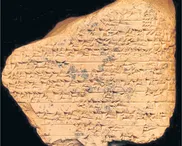
For Darwin, the ‘black box’ was actually very relevant: it was the cellular structure and, within that, the chemical processes that control development and change. One author, Dr. Michael Behe, recognised that this was an area of challenge to Darwinism and wrote a book, Darwin’s Black Box. In this he sought to explore whether the changes required by Darwin could occur at the cellular or molecular levels.
Feathers
We might, for example, discuss the scales of a reptile becoming frayed and so forming a primitive feather. But we now know that this is not something that develops from deterioration of the scales but would need to be controlled by the genetic instructions in the nucleus of the structures. Further, to produce a bird, there would need to be many more complementary changes, even in the feather itself.
The structure of the feather is complex and precise. It also needs associated muscles in order to operate correctly. All these have to be programmed before the changes could become effective.
Other aspects of the ‘black box’ approach cover the complex biochemical processes that control animal and plant physiology. This writer recalls speaking to someone working in this field some years ago. He had sat at his desk at work and looked at a commercially produced chart on the Biochemical Pathways. This is a chart which integrates all the chemical reactions that occur in the cell. It is fascinating, and many a scientist has spent hours studying it. As he sat there looking at it and considered its implications, he realised that this could not have been the result of a series of chance processes selected by ‘natural selection’, but had to be the work of the divine Designer.
Complex coagulation
An example described by Michael Behe which illustrates the complexity and integration of biochemical systems is that of the coagulation of the blood. When we cut ourselves, the wound seals itself with a scab of coagulated blood. The skin reforms beneath this. Superficially this seems a simple process, but in practice it is a series of interdependent chemical reactions arranged in a sequential chain. We can describe it simply, but we must remember that it is actually much more complex than this description.
The blood is coagulated by trapping the blood cells in a web of fibrin. This is readily formed by conversion of a precursor, fibrinogen into the fibrin. This conversion is triggered by the presence of thrombin. Obviously if thrombin and fibrinogen were present together in the blood, the coagulation would occur even when not required and all over the body system. The thrombin is generated by the action of an enzyme on its precursor, prothrombin. But the enzyme itself must be held ready, requiring a ‘trigger’ to act. This is achieved by the presence of vitamin K which ‘locks’ into it at the right moment. And so we have a sequence back to the cut itself. The cutting of the skin causes the formation of an electrically charged fragment. It is this that triggers the chain of reactions through to the enzyme and onwards. Any break in that chain prevents the achievement of the coagulation. This is illustrated by the action of warfarin which can block the vitamin and so prevent coagulation.
Had he known it...
Obviously the process of coagulation needs to be stopped before the whole system coagulates. This is controlled by another sequence of reactions that inhibit the process when sufficient coagulation has been achieved. Both chains must be in place to prevent either excessive bleeding or excessive coagulation, either of which will result in death. This sort of information was not available to Charles Darwin and one wonders how he would have reacted to it.
John Peet