Evangelicals Now
Christian news worldwide
magnifying glass Search archives
home Home check the archives Archives Subscribe Subscriptions Advertising Information & booking of classifieds Adverts Find a local evangelical Church Find a church for the search engines and extremely curious! About us Contact us Site Map
Printable
Version

The Lion Atlas of Bible history

Spirited geography

THE LION ATLAS OF BIBLE HISTORY
By Paul Lawrence
Lion Hudson. 188 pages. £25.00
ISBN 978-0-7459-5152-2

Modern versions of Bible atlases are a goldmine of information. With a number of good editions on the market, probably only a publisher with the reputation for quality would venture to produce yet another!

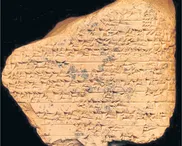
Each section is two full pages long with excellent graphics and a range of photographs of archaeological discoveries and some artistic reconstructions (e.g. of Capernaum, p.140 and Ephesus, p.158). It ranges systematically from the Creation through to the early Church. Articles on neighbouring nations are included.
There is a very helpful item on the existence of domesticated camels in the region in the patriarchal days. In his discussion on the Flood, he recognises that the best evidence of this may well be geological rather than archaeological. Obviously space did not allow him to enlarge on this comment.

I was surprised the author did not describe the outstanding work of Manfred Bietak at Avaris (Pi-Ramesse) and the evidence of ‘Asiatics’ in the region. He does mention the problems of using dates based on the early date of the Exodus, though he shows it fits in well with the Bible data. He confidently uses the equation of Shishak = Shoshenq as a key identification under-pinning the later, 13th-century date. A reference to the work of John Bimson against this would have been appropriate.

The subject matter covers a fair balance between different views, but occasionally this balance is missed. At a couple of points the author strays into biblical interpretation and will leave many unhappy. I refer to the Creation account in which the author dismisses a literal interpretation without giving a balance for the miraculous view of Genesis 1. This is apparent again in the naturalistic interpretation of the plagues on Egypt. Both of these items were unnecessarily biased.

Overall, this is a good publication and will be enjoyed by its readers.

J.H. John Peet,
member of Chertsey Street Baptist Church, Guildford;
retired educationalist, but still busy in the Lord’s work!