Evangelicals Now
Christian news worldwide
magnifying glass Search archives
home Home check the archives Archives Subscribe Subscriptions Advertising Information & booking of classifieds Adverts Find a local evangelical Church Find a church for the search engines and extremely curious! About us Contact us Site Map
Printable
Version

Lessons from the Cambodian church

Interview with Don Cormack

The church in Cambodia went through cruel persecution 50 years after it was founded. Don Cormack's unique account of this period is in his book 'Killing Fields, Living Fields'. It has become one of the most 'talked about' books around.

We in the West have much to learn from the lives of Christians in that south east Asian land. Here Julia Cameron talks with Don Cormack.

JC: Don, not all EN readers will remember Cambodia's terrible suffering in the late 1970s. Perhaps we should start there.
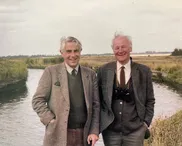
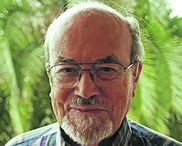
DC: After the protracted agony of the Vietnam War, and the fall of Indochina (Vietnam, Cambodia and Laos) to Communist regimes in 1975, I think most Westerners wanted to forget that part of the world. But Cambodia's agony was just beginning.

Within hours of parading into Phnom Penh, the black-clad teenage Khmer Rouge soldiers began emptying every city, town and village, driving the Cambodian masses into the sun-scorched countryside for 'purification'. Schools, banks, hospitals, money, Western medicine, even the family, were abolished. Subsisting on starvation rations, people were ordered to work in the fields for long days and nights, seven days a week: clearing, growing rice, building irrigation systems, and living in crude, Spartan communes. It was back to the Stone Age, survival of the fittest and politically pure. It was Year Zero.

From the ghost city of Phnom Penh, a shadowy Orwellian government, known only as Angka Loeu or 'the Organisation on High', ruled with an iron fist. The new god-king was Pol Pot, Brother Number One, a French-educated bourgeois; a fanatical, even mystical Marxist, determined to transform gentle, feudal Cambodia into a Communist utopia. Within four years, upwards of two million people lay dead in the killing fields. Among the thousands of mass graves, and fields of whitening bones, were those of virtually the entire Cambodian church, and all but two of her pastors. The term 'killing fields' has now entered the English language and found its place alongside holocaust, genocide and ethnic cleansing, a grim legacy indeed from that reign of terror which the Cambodian people endured from April 1975 to January 1979.

Fall of Phnom Penh

JC: You were one of the last missionaries to leave Phnom Penh before it fell. Tell us about that time.

DC: As the defence perimeter around the besieged capital of Phnom Penh was breached, just weeks before the final capitulation, the stark order to 'leave at once' arrived by telegram. We had become so used to the boom of artillery fire, the clatter of small arms, rocket attacks, night-time flares and tracers, food and fuel shortages, and the endless streams of refugees and wounded pouring in, that when the end came, it took us by surprise. This was also because the eyes and hearts of the Christians were not fixed on those things, but on the Kingdom of God. There was a very crisis of salvation. Everyone was seeking salvation in one way or another from the approaching terror: hoarding gold and rice, fleeing to the Thai border, in denial and dissipation, and thousands were reaching out to the Saviour.

I can still see in my mind's eye the young Christians pedalling furiously through the crowded streets, hurrying from one meeting to another to help new converts, as centres of worship and discipleship multiplied across the city. On the banks of the great Mekong River which flows past the city, scores of new believers were being baptised. They stood in a long line at the water's edge, while on the bank a vast crowd were singing hymns, their arms outstretched in love towards the further shore, from where the glow of enemy fire burned, and a great pall of acrid black smoke rose and drifted towards us. The whole scene was a surreal portrait of love: the love for man, even for those who were contemptuous of God; and the love for God, even to the denial of self.

But the most poignant and memorable moment for me in those final days was during our last service with the Cambodian believers at Bethany Church, in the heart of the city. We knew we were leaving in the morning, if the rescue plane could get through the bombardment of the airport. We gave little heed to the sound of the shelling, now very close around us, as the Christians sang and worshipped, read the Scriptures and prayed. Sitting next to me were two young men who had run the gauntlet through the Khmer Rouge lines, all the way down from the northern town of Siem Riep, near the famous ruins of the ancient Khmer civilisation of Angkor.
'Brother Don, we have come to ask you to return to Siem Riep with us to help disciple the many new Christians there.'

Clearly they had not heard the terrible news that we had been ordered out, and that the fall of Cambodia was imminent. I looked into their eyes until mine misted over, and all the words and excuses caught in my throat. I could say nothing.

It was just too late. The night had come. The time when no man can work had come to Cambodia. After all those exciting months of proclaiming salvation, the time had ended. I thought of all my wasted time and I longed for more, just a little longer. But it was too late.

And I thought too of the end of time, when the day of Salvation is past, and those who have rejected Jesus as Saviour meet him as Judge, crying out to the mountains to fall on them to save them from the wrath of the Lamb. Too late!

Those two dear brothers would have returned alone to their churches in Siem Riep, and very possibly perished in the killing fields, thus fulfilling the law of the harvest, that the seed must die to bear fruit. And I had no doubt at that moment, my heart full of guilt, confusion and sadness, that in heaven too, 'the angel armies of the sky, look[ed] down with sad and wondering eyes to see the approaching sacrifice'.

And then, ramming home the tormenting thoughts which rushed through my mind, some Christians stood to sing a final song:

By and by, when I look at his hands,
Beautiful hands, nail-riven hands,
By and by when I look at his hands
I'll wish I had given him more.
More, so much more,
More of my life than I e'er gave before,
By and by when I look at his hands,
I'll wish I had given him more.

It was their Gethsemane. That evening some of us wept late with the soon-to-be martyred Taing Chhirc who had invited us to Cambodia in the first place. On the morrow the gracious, selfless host and servant he was, travelled out to the airport with us and waited in the bunker till we were safely away. As the little plane circled high out of the range of the guns, we passed round a letter handed to us by Chhirc as we parted. It began:

'To dear Missionary Friends,
'"Where is the Lord God of Elijah?" he [Elisha] cried out.'

Days later, in Bangkok, a final word came from him and the Cambodian church:
'The Lord is with us, isn't he? ("I will not leave you as orphans; I will come to you.") And we praise him because we are not on the losing side!'

With this spirit, the Cambodian church entered into its suffering. During those final three years of great harvest, leading up to 1975, it had grown from a few hundred to about five thousand. With the fall of the Khmer Rouge in 1979, a tiny remnant of a few hundred remained once more.

Church grows again

JC: The Cambodian church has grown again, and hugely in the last ten years. What can we learn from it?

DC: Since freedom of religion was restored in 1990, the Cambodian church has indeed grown massively. The Khmer Rouge, who tried so violently to destroy it, have passed into the pages of history. There are now churches in every province, with Christians numbering several tens of thousands.

There is an urgent need to disciple and train another generation of wise pastors and godly leaders to confront the new metaphorical 'killing fields' of a nation so recently reduced to a wasteland. Predictably, tares are being sown with the wheat. Materialism and the addictions of Vanity Fair will prove even more spiritually-challenging than the guns of the Khmer Rouge. Cambodia is a nation in search of absolution and hope, a new centre around which to rebuild. At this moment, Cambodian hearts are wide open to the gospel. It will not always be so. Pray God that our hearts will be open to them with the love of Christ in action, and our mouths open too, in articulating the gospel, incarnated into their own language and culture.

We thank God for all the prayer for Cambodia, and for the many serious, long-term, church-planting missionaries from East and West who have gone in, are studying the language and moving out across the country. Cambodian Christians from the worldwide diaspora are also returning with the gospel, and with development aid. Well over half of all Cambodians are under the age of 21. May these vulnerable and bewildered children of the killing fields reach out to their Heavenly Father for answers to the mayhem in and around them.

The Cambodian church is materially poor, yet concentrated in her short history she possesses such a testimony to the grace of God, such a great cloud of witnesses, and martyrs 'of whom the world was not worthy', that we would do well to listen and learn. I have distilled here (see below) ten lessons we can learn.

Executioner convert

The Far Eastern Economic Review reported that Pol Pot's chief executioner has become a Christian. That is an almost unimaginable work of grace.

Yes, Comrade Duch, a former professor of maths, was the grand inquisitor and chief executioner of 'the Organisation on High'. He was based at the Tuol Sleng extermination centre in Phnom Penh, apex of a vast pyramid of many such camps of torture and death across the country. His signature is everywhere on the meticulously documented 'confessions' and death lists, 'Kill them all'. As the Vietnamese advanced on Phnom Penh on January 7 1979, he fled to the forested Thai border with the rest of the Khmer Rouge leadership. Then he disappeared from view, adopted another name, and lived in obscurity in the rural north-west. On Christmas Day 1993 he was led to the Lord by a Cambodian Christian, unaware of who this intelligent and enthusiastic new convert had once been. He was baptised in the Battambang River on January 6 1996.

Unlike other former Khmer Rouge, he fully admits his terrible crimes: I am 'the chief of sinners'. For the past five years he has been held in prison in Phnom Penh awaiting trial for genocide and massive crimes against humanity. He has a Bible with him. It is hoped these trials will finally get underway this year. Many in power, who were once allied with the Khmer Rouge will not welcome his confessions. We must pray for his safety in this land of corruption, and that he will hold firm to his faith and give a good account at his trial. He has wisely pleaded guilty and thrown himself on the mercy of the Judge of all.

Costly obedience

JC: How would you like your book to help Christians in the West now?

DC: While the difficulties we face here today are so different from those our Cambodian brothers and sisters endured, I believe we can be encouraged in our faith as we re-encounter the same Jesus we love, afresh in their lives and testimony. Our personal holiness must be our primary concern. I hope this book will spur us on in our high calling to be saints, now. May it encourage us to follow, as they did, the sound advice Evangelist gave Christian as he set out on his way to the Celestial City, 'See that light over there, fix it in your eye and walk straight towards it'.

As to the great and mysterious question of suffering which has challenged every generation of God's people, it seems to me that ultimately Christian suffering can only truly be exegeted in the context of actual suffering for Christ. I never once saw Cambodians shake their fists at heaven because of what they endured, quite the reverse. In the hour of their greatest trial, while many perished ignominiously, the Cambodian Christians experienced amazing things: angels unawares, miraculous deliverance, healings, divine guidance, dreams and visions. But most especially was the fulfilment of Jesus's final promise to his disciples, the awareness of his abiding presence and the deep inner joy and peace that remained through it all. Then, with Job, they cried, 'Though he slay me, yet will I hope in him'. With Abraham, they held on to everything with open hands. With John the Baptist, they recognised that Jesus must increase and they must decrease.

The final question is how are we being found in our appearance as men and women, in our time. Are we willing to obey him even unto ... whatever extremity, whatever point of costly obedience the Father desires to glorify himself? 'And being found in appearance as a man, he humbled himself and became obedient unto death, even death on a cross.' Behold the Cambodian church. Behold your God. He comes to you. He comes to you in humility and obedience.

My hope is that this book will help us all learn what it means to have this mind among us.

Don Cormack and his wife, Margaret, now both teach in Cheltenham. They have three student daughters, and are members of Cambray Baptist Church.

Julia Cameron is IFES Head of Communications and a member of St. Ebbe's Church, Oxford.

Killing Fields catechism

1. Suffering must be seen as a normal part of the authentic Christian life, even though we may not always understand it. We must stop denying and outlawing suffering and death as if something out of order were happening. To insist on living my life without pain and inconvenience is a mark of immaturity. Let us throw off this perpetual adolescence, which affects so much in our churches. The Cambodians, like the early church, knew that to bear the name of Christ involved being crucified by a sinful world and cruciformed by a holy God. This is our vocation as children of God. For the faithful in suffering is reserved the defining, double beatitude, 'Blessed are you when you are persecuted because of him'.

2. We must recover and proclaim the apostolic gospel of holy Scripture that is cross-centred and not self-centred and narcissistic. It is all too easy for the church to become enculturated and indistinguishable from the world around it. Some bishops here, seeking the praises of men, make a virtue out of conformity to the world, even to the point of venturing upon the displeasure of God. The Cambodian Christians always knew themselves to be a counter-culture. With them, we must be unafraid to expose the false idols and altars which have been set up in place of the living God, and the fantasies and deceits that bind so many.

3. Obedience to the Word of God; building up each person to maturity in Christ with a sound Trinitarian theology; learning to obey all that Jesus taught us: these are the only way to that unity and power we all desire for the church. The neglect of serious personal study of the Old and New Testaments, and the creeping superficiality of experience are significant threats to the integrity of the church today. A hundred years ago theological lassitude allowed much of the church to be swept away by the siren song of Social Gospel. Beguiling new siren songs threaten to lead the church into a Babylonian captivity in our own day. Then, sadly, we export these errors to the mission fields.

4. The power of persevering, importunate prayer was central to the survival of the Cambodian church. As we prayed for deliverance from the heel of the Khmer Rouge, little did we expect it to come from the Vietnamese, Cambodia's historic enemy. In January 1979 they swept the Khmer Rouge aside in a matter of days. God is still the almighty 'I am', the ever-present Saviour God, when his people cry out to him in prayer.

5. In 1975, 50 years of missionary endeavour was thrown into the crucible. Some of it turned out to be wood, hay and straw. What was rooted in the Word and the Spirit of God came out as pure gold. Let me quote the words of Raymond Lull, the 13th-century Franciscan missionary-martyr to the Moslems. At the time of the Crusades, he said, 'It is my belief, O Christ, that the conquest of the Holy Land should be attempted in no other way than thou and thy apostles undertook to accomplish it: by love, by prayer, by tears, and by the offering up of our lives.' Sober words for each generation of missionaries.

6. Let us never forget that the poor still need the gospel preached to them. We cannot acquit our consciences by buying into the cult of humanitarianism. Simply turning thin and discontented sinners into well-fed and adjusted sinners, is not God's answer to the needs of the world. The Great Commission springs from the Great Commandment. This is not simply a missiological issue. It is a matter of everyday Christian ethics. No Christian is exempt from fulfilling Christ's final words on earth. Let us gossip and rumour-monger the gospel around, joyfully carry its saving message near and far, and sacrificially support others who do the same.

7. Though poor and unsophisticated, the Cambodian Christians, when left to themselves and the quickening of the Holy Spirit, instinctively worshipped God with fear and reverence, even lying prostrate on the floor when praying. Of course culture is part of this, but are we in danger of losing something important, and to our hurt, as we join the stampede to informality, mediocrity and fun? 'Don't come too close, Moses, and take off your sandals, for the place where you are standing is holy ground.'

8. In Cambodia, I learned the truth of the proverb which begins, 'Give me neither riches nor poverty'. May he give us rather our daily bread, daily trust, daily faith, daily accountability. The danger of becoming self-sufficient and independent of God is ever present. The secret of the making of the masterpiece of a godly human life is in living obediently one day at a time. That's all God asks. That's how the Cambodians walked with him through the flames, and came forth with no smell of the burning upon them, but rather extolling the love of God, and the daily grace which he provided.

9. In Cambodia under that black funeral shroud which hung persistently in the sky above us, I began to learn to encounter each person with awe, as unique and infinitely precious, as in the presence of the image of the Creator-God; hearts in which eternity had been placed. But I also learned that if we are to deal seriously with others, we have first to deal seriously with ourselves; and these are very superficial and unserious times.

10. Finally, the Cambodian experience points to the importance of living humbly by faith and not arrogantly by sight, having the mind of Christ, the great teacher of self-forgetfulness. We need to have our minds and consciences washed and educated daily by his Word. Ultimately, Christian obedience is the result of the acceptance of a gift, the gift of justification by faith, the gift of unconditional forgiveness, the gift of eternal life. Obedience springs from and is motivated by grace received; grace upon grace overflowing to us in the Beloved. It becomes a fire burning in our bones. Many waters cannot quench it.

