Evangelicals Now
Christian news worldwide
magnifying glass Search archives
home Home check the archives Archives Subscribe Subscriptions Advertising Information & booking of classifieds Adverts Find a local evangelical Church Find a church for the search engines and extremely curious! About us Contact us Site Map
Printable
Version

Schaeffer revisited

Julia Cameron interviews Dr Robert Evans

Francis Schaeffer brought a prophetic message to the church over 30 years ago about the sanctity of human life. Dr. Robert W. Evans's forthcoming book 'The Descent of Dignity' revisits the message that Schaeffer implored us to hear.

JC: You describe Francis Schaeffer in your book as your unseen friend. Tell us about his influence on you.

RE: Few have shaped my thinking as powerfully as Francis Schaeffer. As an undergraduate, I took up a volume that he co-authored with C. Everett Koop entitled 'Whatever Happened to the Human Race?' and read it with considerable interest. Schaeffer was saying something very important about the trajectory of Western societies, and how Christians need to become involved lest we witness the complete collapse of a biblically-informed morality. He serves as a powerful example of how to engage with the prevailing culture in order to offer a Christian apologetic.

He was interested in assessing shifts in culture, and the importance of these shifts for the Christian faith. In the same way that he employed art as his lens for cultural observation and commentary, I have employed medicine. I have come to share his conviction that as well as articulating and defending the truths of Scripture, the church must actively engage with the prevailing culture and push back this secularising process that is pushing so very hard against us.

JC: Schaeffer discerned an urgent call to the church in the late 1960s. Do you think he was listened to?

RE: In that pivotal decade, Schaeffer foresaw our current cultural crisis. Sadly I think he was heard only in part. He made abortion-on-demand his bioethical lynchpin between the church and culture. Perhaps because of this, Christians have largely ignored the broader sweep of bioethical issues. These are setting societies in the grip of ethical and moral quandaries such as we have never known before, and we can't afford to stand back and watch.

Issues such as human embryonic stem cell research, human cloning, genetic engineering, alternative medical therapies, and assisted reproductive technologies receive only scant attention in the church. In Whatever Happened to the Human Race? Schaeffer and Koop implored churches to host special speakers and seminar series in which the issues of bioethics could be considered. But even after all of the headlines these issues have created in recent years, few churches have heeded their call.

JC: Are we seeing another opportunity now for the church?

RE: Yes, I believe we are standing on the threshold of yet another historic opportunity for the church. But to seize it we must readjust the way we think. We can no longer persist under the mistaken notion that the issues of bioethics are primarily social, legislative, or political. Christians need to realise that they are essentially theological, spiritual, and moral. First our pastors and Christian leaders need to take seriously Schaeffer's and Koop's imploring to help Christians bring a Christian mind to these concerns. Only then can we equip ourselves for effective cultural engagement, and seize the opportunity which presently stands in front of us.

JC: How can the church best respond to this opportunity?

RE: In The Descent of Dignity I strongly urge the church corporately and Christians individually to take up five tasks.

First, to take seriously Schaeffer's and Koop's plea for church-based seminars and special speakers to help us think through these issues. Second, to teach the implications of being made in the image of God. Understanding this doctrine has a profound effect upon the way we view our culture. We need to instruct on how to make ethical decisions based on Christian convictions. Third, Christians need to begin discussions with their physicians and healthcare workers about frames of moral reference. Fourth, we need to have open discussions with our spouses and loved ones about what we would want done should we, say, fall into a coma. Fifth, Christians need to speak out, write to their MPs, and debate these issues in the public square. And we need to encourage and support those from within the church who can do these tasks well.

JC: These are timely and critical observations. Thank you.

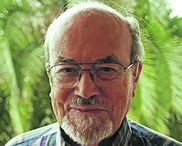
Dr. Robert Evans, Director of the Veritas Institute for the Study of Bioethics and Public Values, was a visiting scholar at Oxford University last term. His book 'The Descent of Dignity' will be published shortly.

Julia Cameron

