Hymns, like buses and some brothers, are normally better separated than together. They all need healthy gaps in between. But that general rule enjoys the odd exception.
Some churches run hymn marathons, where all the hymns in a new book, or the top 100 after congregational voting, are sung through non-stop, often with teams of organists and choirs. Usually there is money involved, and through sponsorship the singers convince themselves they have somehow created cash out of nothing. All this has educational value of a sort, but whether it is worth the price of trivialising the hymns must be open to doubt. It does not seem quite what Monsell or Montgomery had in mind.
But there are other ways of doing your Songs of Praise or Sunday Half-Hour. America is way ahead of us in this, but hymn festivals are not unknown over here. The hymns are not stacked up end to end, but interspersed with Scripture, prayer, biography or meditation. At least three ways of doing it are well-tried.
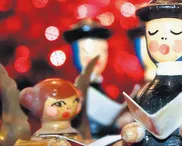
One is the seasonal celebration, of which Christmas carols are a kind of prototype. Why not Advent, Epiphany, Easter, Pentecost? Lent might not be cheerful enough, and Harvest not sufficiently varied, but the idea is straightforward. All Saints could be stunning. Make sure the age and style of the hymns are diverse, maybe with the help of different instruments and an occasional choir or group piece. Mix the familiar with the rarities and the brand new. Some churches are well-placed to link such events with their popular flower festivals.
Local heroes
A second emphasis is the local one. We appreciated discovering some of the Suffolk hymns, where Anglican and Baptists have much to share with one another, not to mention Quakers and Independents. If your county happens to be Hampshire or London, you may need to narrow it down a bit; what about your town or your London Borough? In Tower Hamlets you have everyone from John Newton to Michael Saward. By all means celebrate your own church's contribution, if one or two of your members have put pen to paper. Writers of texts may score here over composers of music; but each group can learn much from the other.
Then there are the anniversaries. The Wesley brothers have a constant stream of them - birth, conversion and death twice over - but the indexes of the music edition of your church's hymn book will provide most of the dates you need to know. Churches have anniversaries too; anything from ten years to a thousand is worth a special sing. Or even a special hymn?
With integrity
One warning; a hymn festival isn't meant to be the latest desperate ploy by confused church leaders anxious to fill the pews. It may do; it may not. It may attract some on the fringe, if through a magazine, website or local paper they know it's happening. It certainly has evangelistic potential. But the first requirement must be to believe in the words you plan to sing. In the planning, you may make some startling discoveries about what you do or do not believe anyway. And the words between the hymns should be thought through as carefully as the words inside them. Evangelicals will want Scripture (not Scriven, Spurgeon or Smith) to have the first and last word.
You may find one other bonus. You know that dear soul who always complains about the hymns, whatever you sing? It is just that much harder to whinge if you know that the next hymn is someone's special choice for that occasion, and you are told the reason. Or even your own. But not, of course, impossible.
Christopher Idle